How Does the Tire Pressure Monitoring System Work in My Vehicle?
What Is the Tire Pressure Monitoring System?
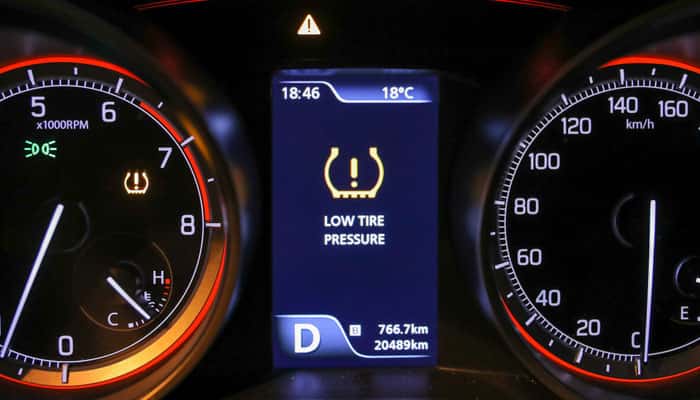
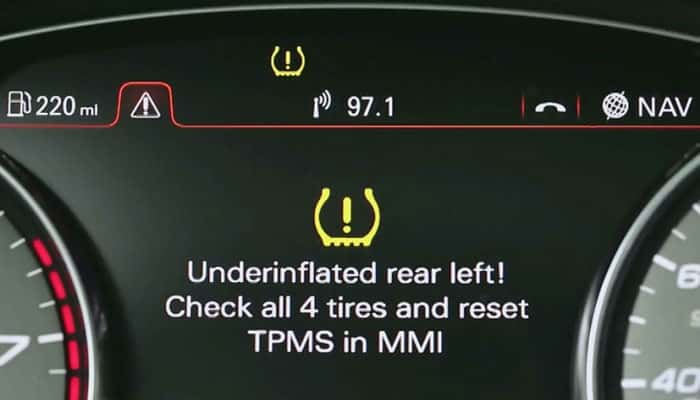
What better way to get started than by discussing the purpose this intuitive technology serves? In short, when one or more of your tires has a low pressure level, a yellow exclamation mark will illuminate on your instrument cluster. Plus, newer Toyota models also display a warning message on their Multi-Information Display, so nothing gets left to chance. This will give you ample opportunity to drive your vehicle to the nearest gas station to get them filled and back to their ideal PSI. If this goes ignored, you’re subjecting yourself and fellow drivers to a dangerous traveling experience, as one of your components might implode, which can result in a loss of control. Ignoring this maintenance can also impact your performance specs, as deflated tires typically result in decreased horsepower, torque, and fuel efficiency. Luckily, this feature is always ready to jump into action to keep you on the road with precision.
How Does the TPMS Work?
Now that you know how essential the Tire Pressure Monitoring System1 is to your safety and vehicle’s performance, let’s address how this feature works. For starters it’s important to immediately fill your components when this icon appears, because more often than not, it means the sensors inside the vehicle are detecting off-filter tires. If you still notice that the icon hasn’t disappeared on your dashboard, then this can be the result of a recent rotation or tire replacement. Fortunately, this can be easily rectified by simply turning your Toyota on, then pressing and holding the reset button to the right of the steering wheel on your instrument cluster. Once the TPMS1 indicator blinks three times, you’ll be able to release and allow the vehicle to recalibrate and record each tire’s pressure. This usually results in the problem being fixed, but if nothing’s changed, you’ll need to bring your RAV4, Camry, or Corolla to our location for a quick inspection.
Tire Care
Staying current with your vehicle’s pressure levels is only half the battle of keeping your tires in optimal condition. It’s also important to participate in regularly scheduled rotations, so you can extend the lifespan of your current set. That’s because the front pair typically degrades quicker than the options in back, and swapping them out will allow you to postpone having to spring for replacements. This will also grant you the opportunity to spring for a four-tire deal at our location, which will be more affordable compared to buying one at a time. If you’re looking to take things to the next level in terms of wear reduction, visit us for wheel alignments. Our technicians will be ready to get to work to get you back on the road with confidence.
How does my Tire Pressure Monitoring System1 work? We at McGrath Toyota of Iowa City are happy to cover all the bases, so you enjoy your time spent while at the helm of your beloved set of wheels.


You’re constantly relying on your Toyota’s driver-assist features to keep you protected from everything life throws your way. One particular technology that doesn’t receive the praise it deserves is the Tire Pressure Monitoring System1. That’s why we at McGrath Toyota of Iowa City are here to discuss the crucial role this feature plays in your daily travels and weekend adventures, so you can tap into your vehicle’s full potential with each expedition. For questions, contact us!
How Do I Reset My Tire Pressure Monitoring System?
- Turn on vehicle
- Press and hold the reset button for three seconds
- Release the button once the indicator blinks three times
- Wait for TPMS to assess and record current PSI